The first year of Donald Trump’s second term has been problematic for most Americans. Tariffs have made life more expensive. Surging investments in AI infrastructure and AI stocks have warped pricing and hiring, with huge sums going to foreign-made tech imports and serious concerns about reduced job opportunity. Income inequality is worsening, while communities are being ground to a halt by paramilitary raids and arbitrary detentions.
First Amendment rights seem to be under daily assault.
- Journalists have been assaulted and arrested, simply for being witnesses.
- Citizens have been killed for being witnesses.
- Many more have been threatened, and some temporarily disappeared, for being witnesses.
- Federal agencies have been weaponized to enforce the President’s personal agenda on news outlets.
The Vice President was formally tasked by the President with enforcing “proper ideology” on the museums of the Smithsonian Institution. The National Parks Service has been ordered to remove references to historic injustice, including the very mention of enslavement or racism—leading many to believe the administration wants to erase the nation’s achievements for justice and human rights.
Scientific research has suffered repeated attempts to curtail or end funding, even as the President claims he wants to “make America great“, and despite the Constitution requiring Congress to support the advancement of science and “useful arts”.
The unilateral seizure by the President of funds appropriated for international development and humanitarian aid is estimated to have caused 833,000 deaths in the last year, 562,535 of them children. Now, the administration wants to end humanitarian assistance that goes directly to saving lives. The instruments through which the American people show decency and grace to the wider world are being dismantled.
This assault on American decency is made worse by the apparent ongoing effort by high-ranking administration officials, including the President, to protect perpetrators of heinous crimes against women and children, in association with the sex-trafficking and enslavement racket allegedly operated by convicted sex offender Jeffrey Epstein.
The Supreme Court reaffirmed, last week, that Article I, Section 8, of the Constitution grants sole authority to impose tariffs and regulate foreign trade to Congress, overruling unilateral tariffs imposed under pretended “economic emergencies” of various kinds. The tariffs themselves have made clear to the American people that the administration is not interested in slowing cost-of-living increases or stopping real income depreciation.
Bloomberg reports that the trade deficit in 2025 was among the worst in history. Extralegal tariffs—taxes unilaterally imposed by the President on the American people, without Congressional authorization—have isolated the US and caused major trading partners to establish new, high-value trade agreements that sideline US exporters.
Earlier this month, a stunning bipartisan letter from former senior leaders in US agriculture—who served in government and as leading advocates for farmers and trade associations—warned American agriculture might be moving toward a dangerous collapse. The letter cites tariffs, increasing costs of farm inputs, now much higher than commodity prices, loss of market access, and the doubling of bankruptcies as driving the farming economy toward an unprecedented breaking point.
The letter noted that tariffs have significantly reduced the export market for American farmers, and warned:
Even as the Administration has disrupted our overseas export markets, cuts to foreign aid and domestic food programs are negatively impacting important domestic and overseas markets for many U.S. commodities, including rice, wheat, and peanuts, undermining U.S. foreign policy, and exacerbating food insecurity here and abroad.
Agriculture relies on attendant and adjacent ecosystems. Agricultural pollutants are undermining productive capacity, ecosystem health and resilience, and human health, globally. The Guardian reports:
Ecological harm from pesticides is growing globally, a study has found, with bugs, fish, pollinators and land-based plants among six species groups hit hardest.
Insects suffered the greatest increase in harm from synthetic farm chemicals between 2013 and 2019, the study shows, with “applied” toxicity rising by 42.9%, followed by soil organisms, which faced an increase of 30.8%.
These impacts undermine agricultural production and long-term resilience and opportunity. They also make it more expensive to finance and insure agricultural operations. Human health is also suffering from policies that remove pollution controls, spread toxic chemicals, and defund science and research.
The Trump administration has fast-tracked pesticides that contain PFAS—“forever chemicals” that are known to have endocrine-disrupting and neurotoxic properties. Such policies direct funding away from farmers, to non-agriculture industrial actors, while generating huge future costs and undermining public budgets.
We should not—in 2026—be talking about the potential collapse of food systems at home and abroad. That we are having such conversations, and facing such peril, is the direct result of policies that ignore impacts on ordinary people, quality of life in communities, and the right of all people to a healthy environment free from toxic pollution and the effects of dangerous climate disruption.
Close ties between the White House and major chemical industry lobbyists raise concerns about what could be unconstitutional efforts to reduce access to evidence and redress, and to make it easier to put toxic chemicals into circulation in air, water, food, and household products.
Polls show Americans are feeling less trust than ever in the instruments of self-government. In December, The Navigator reported:
Recent polling finds between 60% and 67% of Americans believe the country is “on the wrong track”. The reasons are clear: Costs keep rising; basic rights are being threatened; emergency response and major health funding have been slashed; and capital seems to be flowing to AI and away from the real economy of people’s everyday lives.
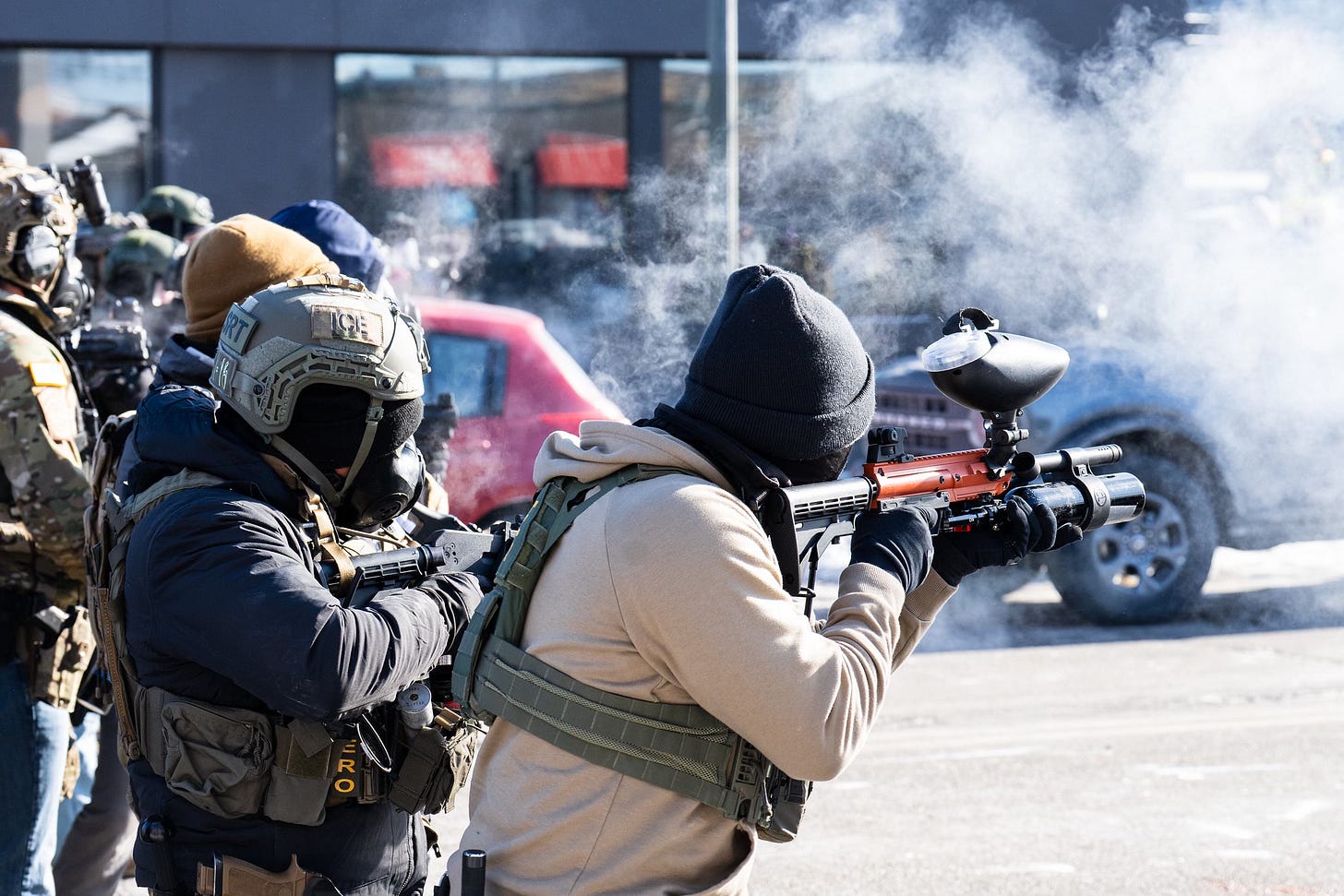
After Renee Good and Alex Pretti were killed in what were evidently summary executions by rogue agents—and the administration smeared them as “domestic terrorists”, public support for the administration collapsed to all-time lows, and some Republicans joined demands for full investigations of the killings. Nearly a year after Ruben Ray Martinez, a US citizen, was shot and killed, new evidence suggests a coordinated cover-up, including false claims in official reports.
The American people rightly worry that the very Constitutional protections that guarantee their freedom are at risk. The administration is secretly attempting to purchase warehouses across the country to hold hundreds of thousands of people in extrajudicial detention. Communities from Mississippi to New Jersey to Oklahoma are opposing these facilities, which have been described as concentration camps or gulags.
There are worrying reports of abusive treatement and inhumane conditions in these facilities. Amnesty International published a report in December citing evidence of torture and forced disappearance at two extrajudicial prison camps in Florida. Conditions at the Dilley prison camp in Texas have been described as “state-sponsored child abuse.”
A recent report on declining public trust noted:
When human rights are ignored, political systems become brittle, lose their adaptive capacity, undermine public trust, and can become a source of instability rather than security and opportunity. [And yet] 2026 has provided a hopeful alternative to the slippery slope of collapsing trust: In Minneapolis, the world has been able to witness a constructive community-driven response. People have voluntarily self-organized to support vulnerable neighbors, even to the extent of putting their own safety at risk to protect others, nonviolently.
The 2026 State of the Union address—a report to the American people mandated by the Constitution—comes at a time when civic renewal is understood to be urgently needed, and yet feels elusive, risky, and difficult to initiate. The Rescue Party is committed to humanizing cooperation as the everyday norm, and to sidelining all politics of dehumanization.
The President reports to the Congress, which reports to the People. In the American system of self-government, it is the People—and our sense of mutual commitment and common decency—that are sovereign.
- As the federal administration undoes decades of progress toward better health, safety, transparency, and future-proofing of our economy and communities, leading locally is more important than ever.
- We must work together, as free human beings in a society founded on our fundamental and unalienable rights, to overcome the perils of this moment and craft a future of open democracy, sustainable industry, reduced inequality, and greater freedom for all.
FEATURED IMAGE
 Rescue Rights & Freedoms