In the summer of 1776, the people of what is now the United States of America decided to end the rule of monarchs and aristocracy. In place of autocrats and oligarchs, they established a republic—a political system that belongs to the people, where elected public servants work for the people, instead of commanding and controlling them. So, we are all, in this sense, republicans.
A republic is a democratic system, in which the people are sovereign and self-governing. This is the ethos of American political life. We organize our lives, our communities, our several states, and our country, in a collaborative way, for the benefit of all. A call for common sense in political life established the revolutionary idea that “no taxation without representation” can be legitimate, and so jurisdiction is about service, not control. We decide, together, how to make a livable future. So, we are all, in this sense, democrats.
Rights are universal and unalienable. Office-holders are servants of everyone else, even—and maybe especially—of the marginalized and vulnerable. What the Declaration of Independence did right, and did so effectively, was to recognize that all human beings are inherently valuable as human beings, and that all human rights are inherent and unalienable. No person can be separated from their humanity, or from the active protection of their rights by the rule of law.
The mission of the country is idealistic and ambitious—to “establish Justice”, provide for “the general Welfare”, and to secure the rights and liberties of future generations. The Declaration treats anti-immigrant policies as a violation of everyone’s human rights, and The Constitution would eventually require Congress to support and advance immigration and naturalization as integral to the national purpose.
The republic was not only for those already there; it was to be a beacon of freedom and a place of refuge and opportunity. It stood for the rights and dignity of all humankind, and yet:
- Thomas Jefferson’s recommendation that imposing enslavement on the colonies be listed as one of the tyrant’s abuses—“a cruel war against human nature itself”—was rejected by co-authors who felt doing so would divide the union and make it vulnerable to reconquest.
- The Constitution would be written in a way that made room for enslavement in states that allowed it, even as the Bill of Rights issued the clear, absolute, and legally binding mandate that “No person shall be deprived of liberty without due process of law…“
- Women were not explicitly recognized as having equal rights and would not be allowed to vote at all until 1920.
- The description of Native American peoples in the last of the grievances listed in the Declaration reflected real, ongoing violence against Native peoples and helped to enable more than a century of forced displacement and ethnic cleansing.
A nation that allows such exclusions and injustices cannot succeed in achieving such a bold and transcendent mission. So, the republic has been defined by its complicated, inconsistent striving—to be a safe haven for persecuted peoples and the agent of rescue for humankind against the tyranny wrought by those who seek power to grant themselves wealth and impunity. That striving is real, and it is all the more important, because it is complicated by original sins and by ongoing injustice.
Our greatest moments have been defined by openness, and by the additional liberation of people formerly oppressed and abused. Americans of all perspectives and persuasions recognize the freedom of the human mind and spirit as a core value; in that, we are all liberals.
In all our diversity, we believe authority is conditioned on serving honorably. We believe human rights are unalienable. We believe all people are born free and all institutions must honor that fact. We have led the establishment of international bodies centered on these core values, with authority to rally nations to the defense of human rights and dignity.
To celebrate the boldness and humanity of the nation’s stated mission, we must recognize that indigenous peoples lived a history of at least 30,000 years, before Europeans arrived. In the Guna language of what is now Panamá, the Americas were called ‘Abya Yala‘, which means the mature land. Stewardship of landscapes and ecosystems, and of wildlife, was integral to many Native American cultures.
The land was cultivated and cared for, and wildlife populations and forest and river ecosystems were managed, so abundance would follow. The Constitution’s recognition of the duty to “secure the Blessings of Liberty” to future generations draws on this example of stewardship.
The Constitution requires advancement of science not to deplete and destroy vital ecosystems, but to ensure enduring health, security, and wellbeing. This is how Pres. Theodore Roosevelt came to see conservation as a core national purpose. It is why we must treat planetary health as integral to our project of cooperative empowerment and protection.
Freedom is a natural human condition, but it becomes real in our everyday lives when institutions are compelled to honor the right of all people to be whole, free, imaginative, and of service to our shared project.
It would take the American democratic republic 15 years of war and negotiation to fully establish the new Constitution and system of government. It would take another 74 years to establish the formal, legal, and practical end of human enslavement. The republic would be 144 years old before women—who comprise the majority of the population—would be able to vote to help decide who serves in public office.
A full century would pass after the end of the Civil War, before civil rights and voting rights, and the right to remain free from terrorist violence, would be confirmed to belong to all people, regardless of race. From the 1830s through the 1960s, terrorist militia opposed to universal rights—the purpose of the nation—would commit mass murder and would corrupt public institutions in local communities and in many states.
When we talk about the founders and the framers, the revolutionary people and movements that make American freedom real, we must recognize Frederick Douglass and Harriet Tubman, and countless others who risked everything to end the “cruel war against human nature itself” that was the evil of enslavement. Their courage and example improved conditions for all Americans, by removing from our system of laws the allowance for unbridled evil against innocents.
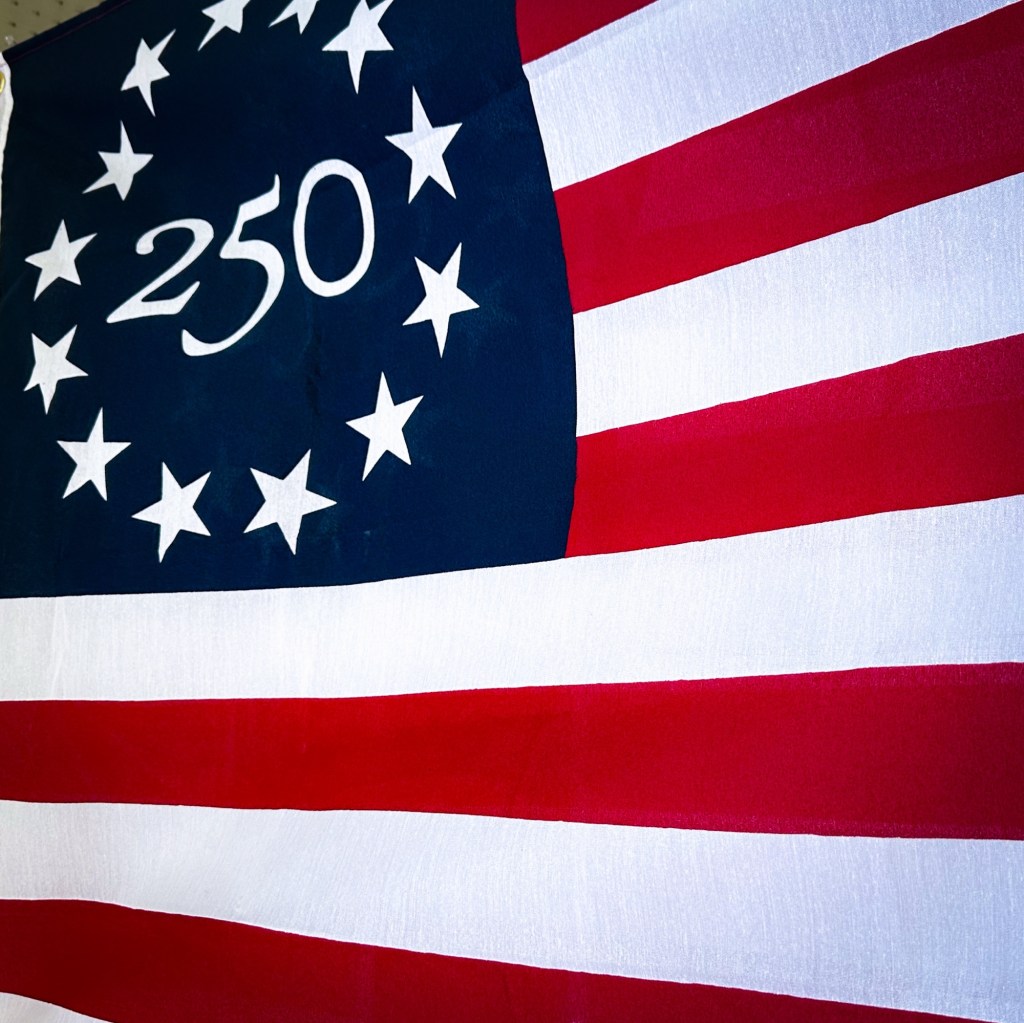
In our 250th year, we saw a remarkable resurgence in awareness about both the stated mission of our nation and the very real power of ordinary people, local communities, and civil society. When a campaign of extrajudicial violence and imprisonment targeted the Twin Cities, in Minnesota, first hundreds, then thousands, of people organized to help those in need and to defend the foundational legal principle that no one’s humanity can be discounted or disregarded by the state.
When two American citizens—Renee Good and Alex Pretti—were murdered for speaking up for that very principle—foundational to the nation, to our laws, and to the major religions most Americans espouse—that violence against innocents is unacceptable, tens of thousands of people rallied to the cause.
Groups of neighbors organized to deliver food and medicine to families hiding from roving paramilitary units. Doctors and nurses made house calls to ensure persecuted families did not go without care. Clergy, community centers, small businesses, and school teachers escorted children to and from school and stood unarmed against heavily armored militia members operating outside the rules set by the Bill of Rights.
It was America at its best. The movement was more redirection than resistance—a reminder that people have a right to be decent to each other. For our next 250 years, may we recognize this foundational spirit of shared liberation through common decency, that our 9th Amendment protects all human rights, whether they are written into law or not, and our 10th Amendment situates ultimate authority in the people.
This practice was recognized by the Rev. Carolyn Cavaness, on the occasion of the award of the Liberty Medal to Pope Leo XIV, when she called on all Americans to remember “ancestors who built institutions of care when the nation would not.”
When we talk about leadership and the defining of our shared values, we must also remember all of the people who have served—in the armed forces, as medics and reporters on the front lines, as teachers and postal workers, and local municipal staff. Those quiet contributors to the common defense and the general welfare are real leaders in our shared project of liberation. Those who sacrifice do so not for power-holders, but for everyone else who lives quietly, out of the gaze of history, making things work.
1776 was about many things, but principally, it was about the opportunity to make your own life in your own way. We have before us the same profound challenge that faced the founders—to resist the structural temptation to empower tyrants, in defense of a limited subset of ideas.
Democracy is hard work; it requires everyone to be part of the process of deliberative governance. When we tune out, stop reading, make reflexive decisions, and prejudge those who differ from us, we undermine our chances at successful self-government.
Liberty demands that no person be treated as less than fully worthy of the unwavering protection of a great republic. No person should be excluded from the opportunity to pursue lifelong education and to apply their talents. No person should be less able to vote and to shape our government.
We must distinguish, together, in a cooperative way, between those values that liberate humankind and those that make room for cruelty and neglect. As we mark the 250th anniversary of the Declaration of Independence, let’s treat each other as the allies that we are bound to be: Freedom is secure when we are free together.
 Rescue Rights & Freedoms