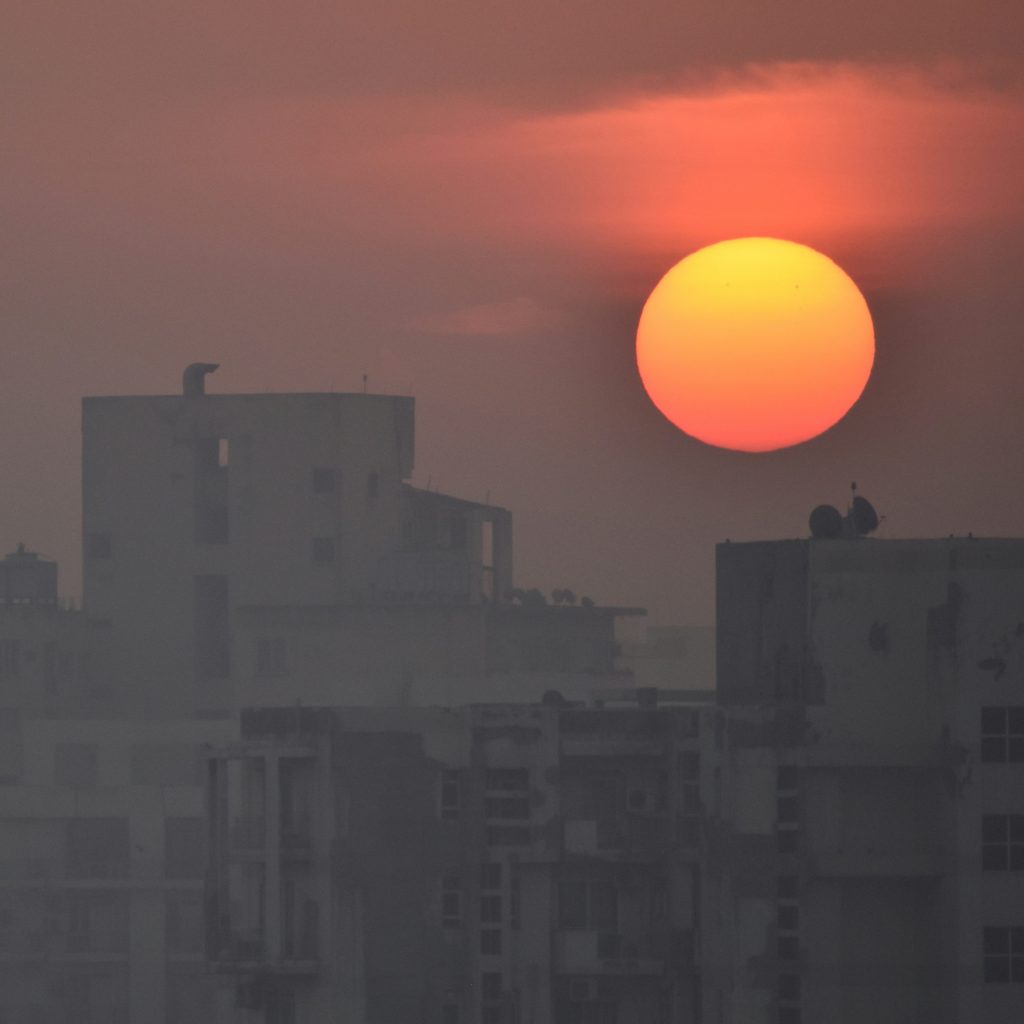
Midsummer wildfire smoke from Canada has again flooded the skies across much of the United States. The dangerous levels of smoke stretch from Minnesota to the Atlantic Ocean and as far south as Maryland and Washington, DC.
Air quality index ratings above 150 are considered dangerous for all people, while lower levels can cause serious health threats to vulnerable people, including children, the elderly, and people living with degraded respiratory capacity.
- Guidance for everyone at levels above 150 include recommendations to limit outdoor activity, forego exercise and avoid walking even short distances.
- For vulnerable people, that recommendation to limit outdoor activity comes with levels as low as 50-100 AQI.
- When air quality alerts and emergency warnings are issued, everyone should consult the details behind the warning and seek to understand their own risk and recommended preventive measures.
The dense, choking wildfire smoke—which blocks sunlight and turns the skies orange, and sometimes brown or red—is the result of climate disrupting pollutants, which have made it far more likely for large wildfires to occur in dense Boreal Forest territory in Canada. Altered climate conditions also make it more likely these fires will grow to regional scales, larger than cities, and that they will become difficult to control.
The politics of climate policy should be straightforward:
- Heat-trapping gases are heating the planet.
- This is leading to disruption of major climate patterns and high-intensity impacts, like large-scale long-burning wildfires, horrific flood disasters, and dangerous storms.
- Providing for human security and livable conditions in cities and regions far from these impact locations requires a reduction in global heating pollution.
- Governments and the private sector should look for ways to innovate and develop sustainably, while not polluting.
- Communities, watersheds, food systems, and infrastructure, need new adaptation and resilience measures.
Unfortunately, those who profit from pollution or from other unsustainable activities, have opposed straightforward action to reduce climate risk and build resilience. In 2025 and 2026, this campaign of opposition to human security now includes efforts to dismantle science platforms and shut down major climate science reports that inform actions to protect human health.
The result is we are seeing climate disruption worsen, with impacts increasing threats to human health, security, and opportunity. When wildfire smoke spreads across continents and oceans, there is a need for specialized, multidimensional human security response measures. Such programs are now seeing reduced funding, due to degraded political support for climate action.
This is why Americans are being asked to stay indoors, to wear masks, and to treat the atmsophere around them as a threat to their health and the health of their loved ones. In the month the United States marks 250 years since its founding as a republic committed to universal human rights and natural freedom, the political sabotage of climate action is limiting human freedom in the most direct and intimate way.
We view it as crucial to understand that, at its founding, the United States was created to “establish Justice”, to “promote the general Welfare”, and to serve future generations (“posterity”) with honor and integrity. Beyond this:
- Article I of the Constitution requires a national commitment to the advancement of science.
- The First Amendment prohibits political manipulation or suppression of scientific findings.
- The Bill of Rights protects the right to bear witness and to have access to truthful information.
- The Fifth Amendment bars government from taking life or liberty, putting the value of human existence above the whims of political leaders.
- The Ninth Amendment clarifies that all human rights enjoy full legal protection, even if they are not written down.
Some in politics find this inconvenient—the idea that all human rights are protected by the Constitution. They worry that their space to act without accountability is reduced by this standard and that they cannot predict what rights might need specific newly stated protection or might arise in court.
The First Amendment prohibits government action to reduce ordinary people’s right to seek redress for harm caused. This is a reinforcement of the principle that the people are sovereign, not government leaders, and that all human rights are protected. The aim of American law is to reduce the room for unaccountable action by powerful people and institutions.
One of the reasons for the protection of universal human rights, including the right to science and information, is the recognition by the framers of the U.S. Constitution that access to facts, evidence, and learning, are necessary for the use of free will to make virtuous choices. We are not free to be good to each other, to protect human rights, or to serve future generations with honor and integrity, if we cannot access facts and solve problems.
Climate disruption and its impacts on everyday life are active degradations of the founding principles of American freedom, which we have learned to take for granted. Combatting climate disruption, reducing the spread of wildfire smoke and protecting the right to enjoy summer days, are projects involving all of society. Pursuing those solutions is a defense of human freedom.